
Decarbonizing Cement: Renewable Energy Integration Roadmap
An outlook on renewable energy integration across India’s cement manufacturing base through FY2035
Date of Release – September 2026
India’s cement producers face a dual task: expand capacity to serve growing infrastructure and construction demand while reducing emissions from a hard-to-abate manufacturing process. Clinker production generates most of the sector’s emissions through kiln fuel combustion and the chemical breakdown of limestone. Producers must address both sources to meet their decarbonization goals. Renewable electricity offers an immediate, cost-competitive way to reduce emissions from the power they consume.
Leading producers have already made green power a core part of their plans. As of FY2026, the eight producers assessed in this report had installed more than 3.5 GW of renewable energy capacity. They also operated approximately 1.3 GW of waste heat recovery capacity, taking their combined green power capacity to around 4.8 GW. Dalmia Bharat, UltraTech Cement, Shree Cement, and JK Lakshmi Cement have joined RE100 and committed to sourcing 100% renewable electricity within their respective target timelines. Rising renewable consumption obligations add momentum across the wider industry.
Plant configuration will shape the next stage of adoption. Standalone grinding units use electricity as their primary energy input and can integrate renewable procurement as they add capacity. Integrated plants also need electricity, but their continuous clinker operations demand a dependable supply. Wind-solar hybrid projects and battery storage can help producers serve more of that load with renewable power, alongside their existing waste heat recovery systems.
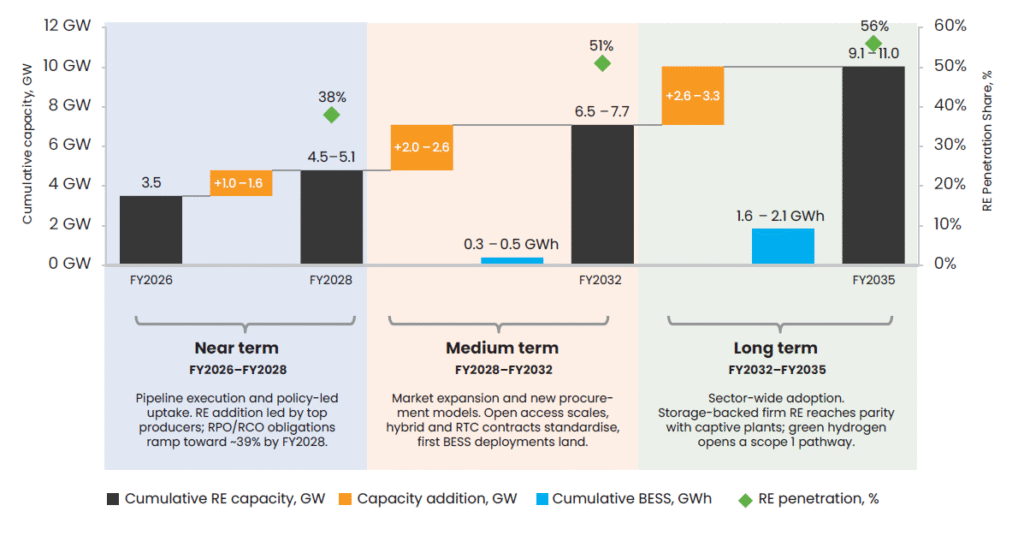
Figure: Renewable energy integration roadmap for the Indian cement sector
Source: JMK Research
JMK Research estimates that the cement sector could reach 9.1–11 GW of cumulative renewable energy capacity by FY2035. Under the report’s roadmap, renewable power could meet approximately 56% of sector electricity consumption, supported by 1.6–2.1 GWh of battery storage. The report examines the distinct pathways for grinding, clinker, and integrated units and identifies the procurement, policy, and infrastructure measures that can support this growth.
Table of Contents
- Indian Cement Sector Overview
- Cement Manufacturing Units
- Industry Landscape: Renewable Energy &Decarbonization
- Industry Structure and Market Concentration
- Green Power Adoption and Decarbonization Drivers
- Outlook: Renewable Energy Integration in the Cement Sector
- Grinding Units
- Clinker Units
- Integrated Units
- Thermal Process Electrification: Developing Decarbonization Pathway
- Renewable Energy Adoption: A Sector-Wide Outlook
- RE Roadmap
- Conclusion
Enter email to download the full report: