
India’s First Grid-Scale Merchant Battery Energy Storage System (BESS)
Case study: Juniper Green Energy (Rajasthan, capacity: 50 MW /100 MWh)
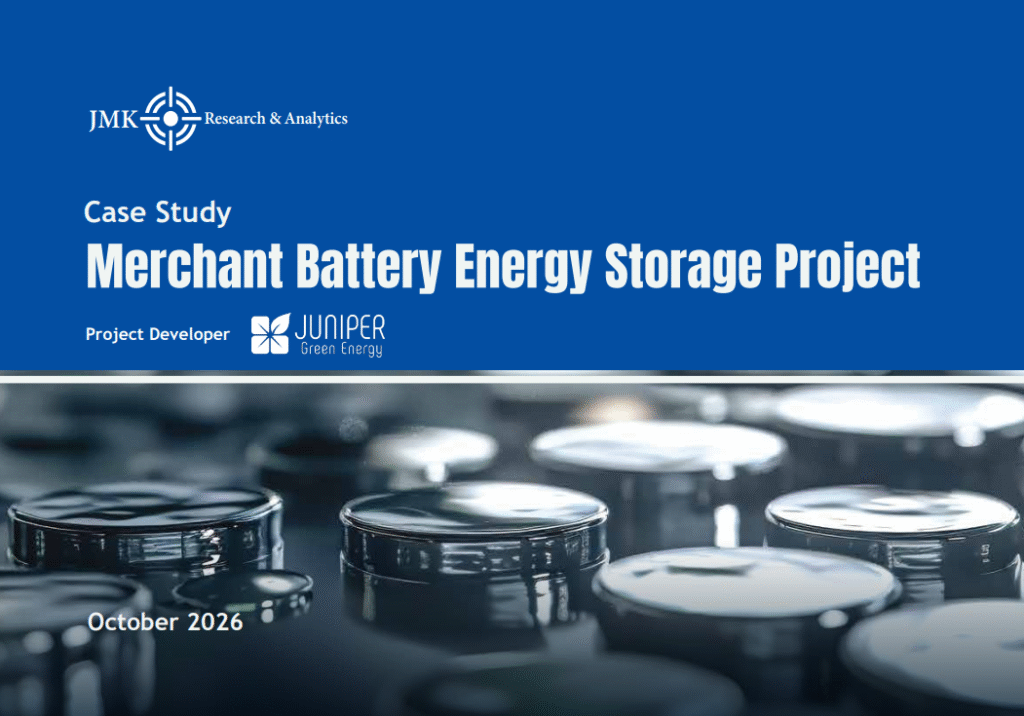
India’s power sector is changing rapidly as solar and wind energy scale up across the grid, creating transmission bottlenecks, solar curtailment, and evening peak demand gaps. To solve these grid stability challenges, Battery Energy Storage Systems (BESS) have become a vital asset class, shifting from traditional long-term power purchase agreements toward flexible merchant models.
To capture this opportunity, Juniper Green Energy commissioned India’s first grid-scale merchant BESS project in Bikaner, Rajasthan. Operating on a dynamic dispatch strategy optimized for a two-hour discharge cycle, the facility charges using curtailed solar power from a co-located plant and low-price electricity bought from power exchanges during off-peak hours. The stored energy is then traded commercially across the Day-Ahead Market, Real-Time Market, High Price Day-Ahead Market, and bilateral transactions.
This merchant model delivers significant benefits by shielding developers from auction tariff compression, avoiding DISCOM payment delays via exchange settlements, and enabling public utilities across multiple states to manage renewable purchase obligations and bypass expensive gas-based peaking power. Despite early hurdles, declining global battery costs, domestic manufacturing incentives, and maturing ancillary and capacity markets point to strong long-term growth for merchant storage across both utility-scale and commercial and industrial (C&I) applications.
Table of content
- Introduction to Merchant Battery Energy Storage Systems (BESS)
- Merchant BESS Development in India
- About Project Stakeholders
- Project Details
- Project Cost and Investment
- Project Performance
- Project Benefits
- Risks and Challenges for Merchant BESS Market
- Way Forward
- Conclusion
To download the report, please enter your email: