
Whitepaper – B2B Adoption in Electric Cargo Three-Wheelers Market in India
Date of Release – March 2026
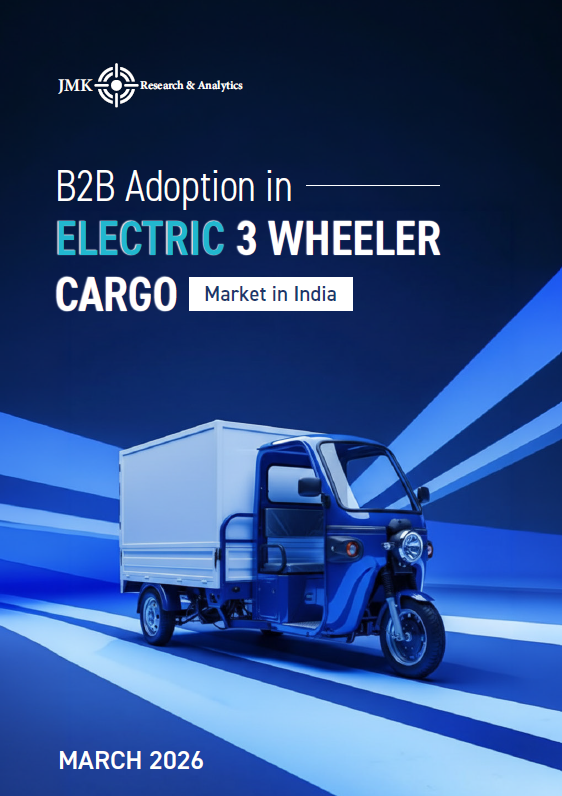
Electric cargo three-wheelers have become one of the most practical electrification options in India’s logistics sector. Their adoption has been driven less by technological push and more by operational benefit to the fleet business. As e-commerce and hyperlocal deliveries increased after the pandemic, organised fleet operators began deploying electric cargo three-wheelers at scale to improve operational cost and reduce dependence on fuel price volatility.
The market for electric cargo three-wheelers can be broadly divided into lower-capacity vehicles used for local deliveries and higher-payload vehicles used in organised B2B logistics. These two use cases differ in operating needs and influence how fleet operators and manufacturers approach vehicle selection and deployment. In both cases, the suitability of e3W cargo is driven by their ability to deliver reliable service at lower operating cost in structured Executive Summary logistics environment.
Key Findings:
- Electric cargo three-wheelers are predominantly deployed in organized B2B fleet operations, where predictable delivery volumes support high daily utilisation.
- Adoption accelerated during the phase led by demand incentives but is now increasingly driven by operational economics and logistics demand.
- Fleet growth is supported by multiple operating and financial structures, allowing operators to scale deployments while managing capital exposure and ownership risk.
- Higher-payload electric cargo vehicles gained traction during earlier policy support periods, particularly among organised fleet operators.
- From a lifecycle cost perspective, electric cargo three-wheelers offer more predictable operating expenses, which is critical for fleet businesses operating on low margins.
- Asset-light approaches such as leasing and service-based deployment are emerging as important enablers of fleet expansion in a post-subsidy environment.
- While electric three-wheelers remain the backbone of urban fleet electrification, gradual adoption of electric four-wheelers is visible in routes requiring higher payload and fewer trips.
The whitepaper covers the following content:
- Executive Summary
- Why e3W Cargo is preferred in B2B EV fleet?
- L3 vs L5 Electric Cargo Three-Wheelers from B2B Perspective
- Impact of Policy and Regulations in Enabling B2B e3W Cargo Fleets
- FAME II scheme
- EMPS
- PM E-DRIVE Scheme
- Total Cost of Ownership in 3W Cargo Business
- B2B Fleet Operating Models
- Financial Structure Behind B2B Electric Cargo Three-Wheeler Fleets
- Key Players in B2B E3W Cargo Fleet
- Key OEM players in Electric Carts (L3) Fleet
- Key OEM players in L5 e3W Cargo Fleet
- EV Focused B2B logistics Players
- Key Risks and Challenges
- Conclusion
Enter E-mail to download the report